Stay ahead of the game

Sign up for our newsletter to receive the latest digital marketing strategies and insights for the month ahead, delivered straight to your inbox!

    Top 10 Programmatic Advertising Platforms for Agencies

    Ad Platforms

    Most agencies pick their programmatic advertising platforms the same way they picked their first one: whatever a sales rep pitched them three years ago. That’s a mistake. I’ve audited agency stacks where the team was paying for four DSPs and actively using one and a half.

    Here’s the number that should bother you: programmatic already accounts for more than 90% of US digital display ad spend, according to eMarketer, and mobile now pulls in over 70% of that spend, up from under 40% a decade ago. The category isn’t niche anymore. It’s the default. Which means picking the wrong platform isn’t a small inefficiency, it’s a structural drag on every campaign you run through it.

    This is also a textbook case of the paradox of choice. Psychologist Barry Schwartz showed that more options don’t lead to better decisions, they lead to decision paralysis and worse outcomes, because every extra platform is another login, another billing relationship, another approval process standing between your team and launching a campaign. Agencies don’t need more programmatic advertising platforms to compare. They need a shorter, sharper list and a clear reason each one made the cut.

    So here are the 10 platforms worth your evaluation time in 2026, starting with the one most “top DSP” lists skip entirely because it isn’t a DSP – it’s the layer that gets you into all of them faster.

    Table of Contents

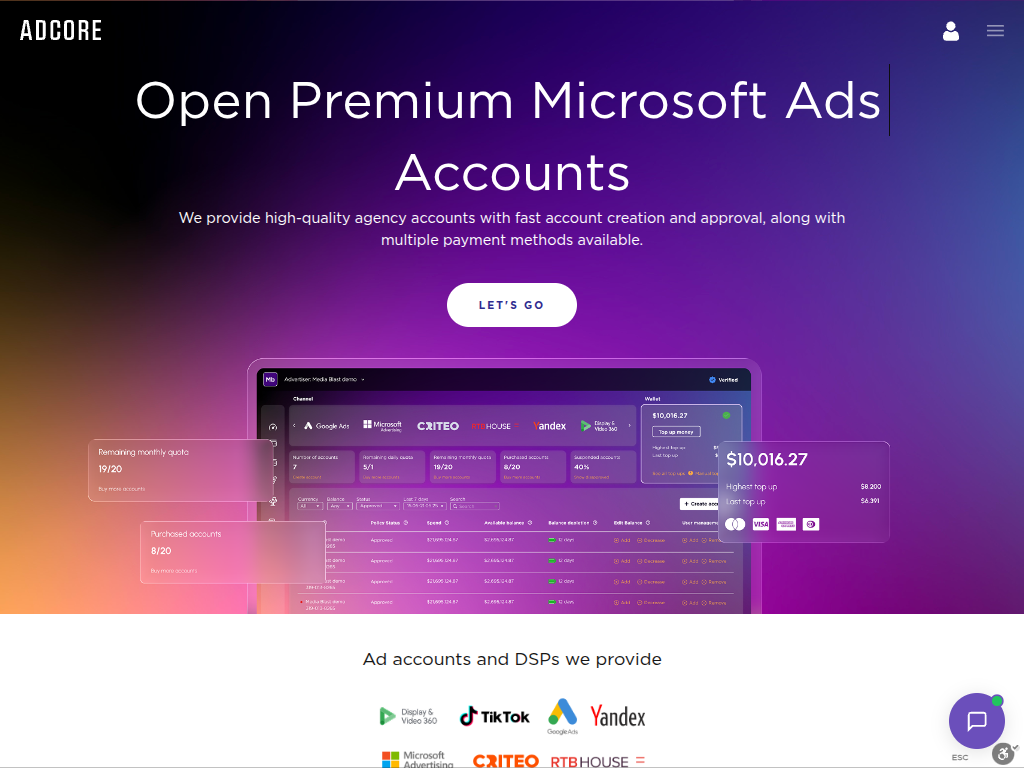
    1. Media Blast

    Every other entry on this list is a single DSP. Media Blast is the layer that sits above them.

    Here’s the problem it solves: getting approved on DV360, Criteo, RTB House, or Yandex as an agency isn’t instant. Account setup, credit checks, and MCC approvals can take days or weeks per platform, per client. If you’re running campaigns for 15 clients across four platforms, that’s dozens of separate relationships to manage, bill, and keep in good standing.

    Media Blast gives agencies fast-approval access to Google Ads, Microsoft Ads, TikTok Ads, Criteo, RTB House, DV360, and Yandex through one dashboard, with consolidated billing so your finance team isn’t reconciling seven invoices for one client’s campaign. Budget can be reallocated across accounts in the time it takes to notice one channel is outperforming another, and Adcore backs unspent budget with a 100% money-back guarantee.

    For agencies scaling across programmatic ad platforms, that’s the actual bottleneck, not campaign strategy, account access and stability. Adcore holds Premier Google Partner and Elite Microsoft Partner status, and its support team works around the clock, which matters most in the exact moment an account gets flagged and a client’s spend is on the line.

    If you’re comparing DSPs, compare Media Blast against the friction of managing each one separately. You can see the full breakdown on the Media Blast page.

    media blast screenshot

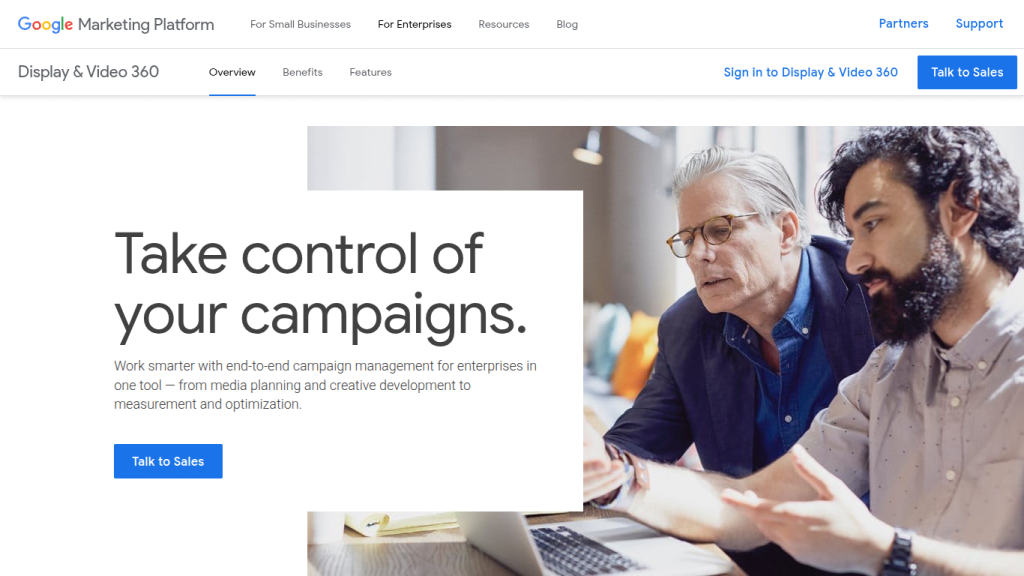
    2. Google Display & Video 360 (DV360) and The Trade Desk

    These two get evaluated first because they’re the platforms your competitors are already running.

    DV360 evolved out of DoubleClick Bid Manager and remains the default choice for teams already living inside Google’s ecosystem. It buys display, video, native, and mobile inventory, and integrates natively with Google Analytics and Campaign Manager, which matters if your reporting stack is already Google-first. The tradeoff is a steep learning curve and pricing that scales fast once you’re running real budgets across multiple advertisers.

    The Trade Desk takes the opposite pitch: an independent, self-service DSP built around deep first-party and third-party data analysis for targeting across the full customer journey, not just Google’s inventory. Agencies choose it specifically to avoid over-relying on one walled garden, and its identity resolution tools have become a reference point for the industry post-cookie.

    Both are strong, both are crowded with agencies who got there first. If you’re already running either, the question isn’t whether to switch, it’s whether you’re using Media Blast’s multi-account access to also run Criteo or RTB House in parallel without adding a full second stack of logins and billing relationships.

    dv360 screenshot

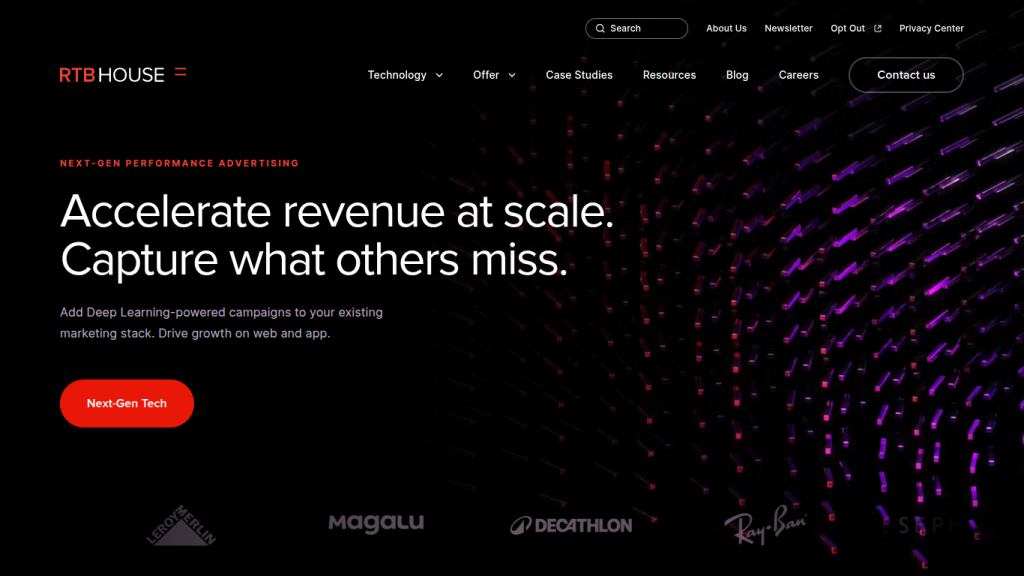
    3. Criteo and RTB House: The Retargeting and AI-Driven DSPs

    If DV360 and The Trade Desk are the generalists, Criteo and RTB House are the specialists agencies bring in for one job: recovering shoppers who didn’t convert the first time.

    Criteo built its reputation on dynamic retargeting powered by one of the largest commerce datasets in the industry, its Commerce Media Platform draws on shopper behavior across a huge network of retail and ecommerce partners, which makes it particularly strong for ecommerce clients with real product catalogs to push back in front of abandoners.

    RTB House takes a narrower but deeper approach, running proprietary deep-learning algorithms per-campaign rather than a shared model across all advertisers, which tends to outperform generic retargeting once a campaign has enough data to train on.

    Both platforms typically require an agency credit line or MCC-style approval to access directly, which is exactly the friction Media Blast removes by giving agencies fast-approval access to both without opening a separate billing relationship for each client running retargeting alongside their core programmatic ad platforms.

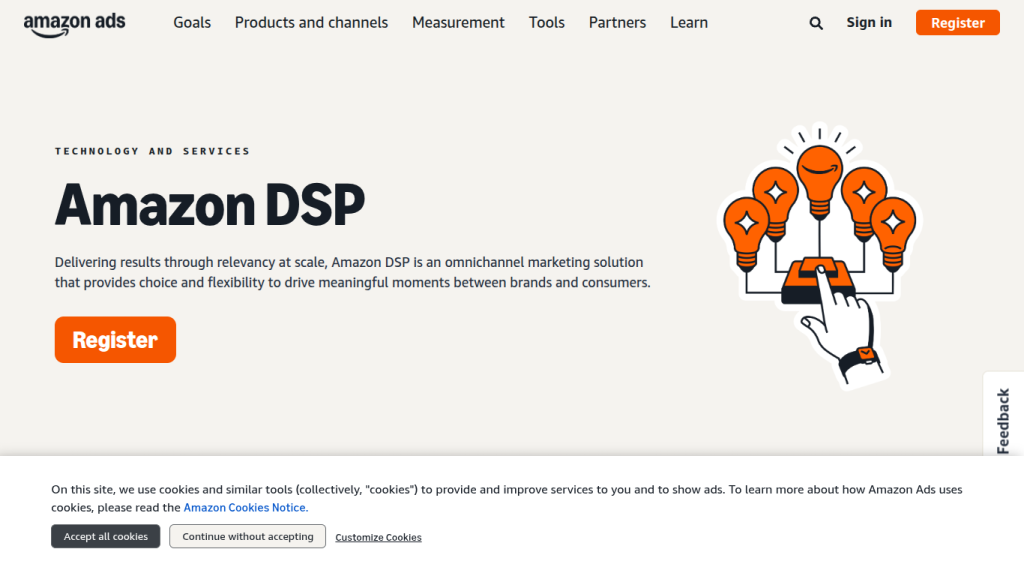
    4. Amazon DSP, Adobe Advertising Cloud, and Xandr

    These three earn their spot because each one owns a data advantage no one else can fully replicate.

    Amazon DSP leverages actual shopper purchase data, not modeled intent, for targeting and retargeting across display, video, and CTV. For any client selling physical products, that first-party purchase signal is hard to match elsewhere.

    Adobe Advertising Cloud pitches itself as the enterprise omnichannel play, bundling marketing automation, A/B testing, and its Media Optimizer forecasting tool into one system. It’s a strong fit for agencies already running clients through the Adobe Experience Cloud stack, less so as a standalone pickup.

    Xandr, now under the Microsoft Advertising umbrella, gives agencies a scalable path to align ads with targeted audiences across a large publisher network, and benefits from Microsoft’s push to integrate AI-driven optimization across its ad stack.

    None of these three replace each other, and none of them replace the account-access problem. Whichever combination your clients need, that’s still a separate approval and billing thread per platform unless it’s routed through a layer like Media Blast.

    amazon dsp screenshot

    5. PubMatic, Yahoo DSP, and How to Actually Choose

    PubMatic is technically supply-side infrastructure, but its media buyer console gives advertisers a direct route to publisher inventory across OTT, CTV, and native formats, useful when you want fewer intermediaries between your bid and the impression.

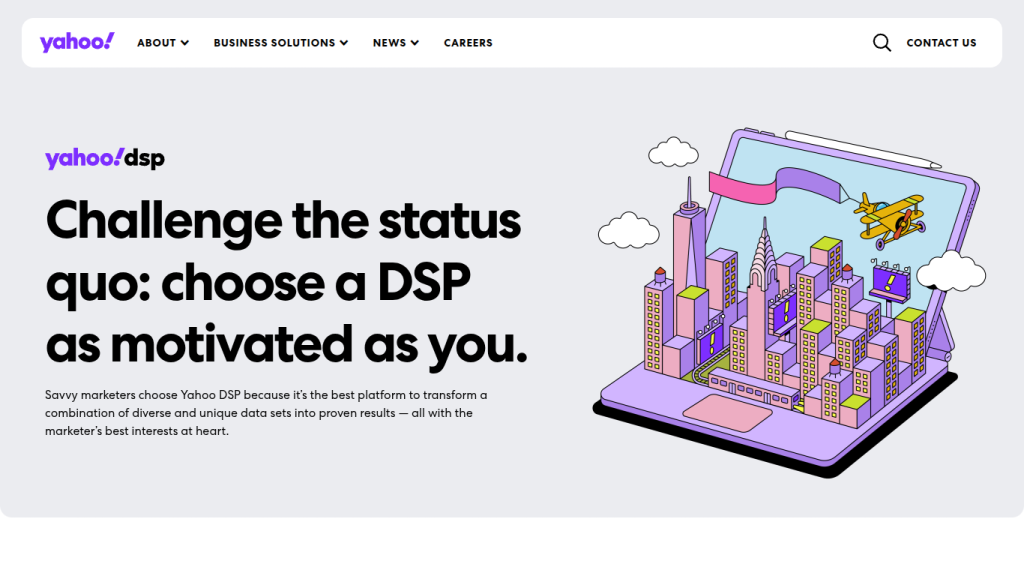
    Yahoo DSP rounds out the list as a lower-cost entry point into programmatic video and native inventory, often used by agencies running smaller client budgets who still want CTV reach without Amazon or DV360 pricing.

    Here’s the actual decision framework, stripped of the sales pitch: pick your core one or two DSPs based on where your clients’ audiences already are, then solve account access separately. Don’t let platform-by-platform approval timelines dictate which programmatic advertising platforms you’re “allowed” to test this quarter.

    That’s the practical case for running Media Blast underneath whichever DSPs you choose. It’s not a competitor to this list, it’s the thing that makes testing three of them instead of one actually feasible for an agency’s operations team. Learn more on the Media Blast page, and for a deeper primer on how programmatic buying works end to end, see Adcore’s guide to everything you need to know about programmatic advertising.

    Getting Started

    Choosing the right programmatic advertising platforms is only the first step. You still need to get approved, set up billing, establish credit, and connect each client account before you can actually start buying media.

    There are two ways to do it.

    Option 1: Open Each Platform Separately

    You can approach each platform directly and open your own agency accounts. That gives you a direct relationship with every provider, but it also means handling the process yourself:

    • Separate applications and approval processes
    • Credit checks and billing arrangements
    • Individual negotiations with each platform
    • Separate account structures and access requirements
    • Ongoing communication with multiple platform teams
    • Different billing and payment processes for each platform

    For agencies working across several programmatic ad platforms, that can quickly turn into a lot of back and forth before a campaign even goes live.

    Option 2: Use the Adcore Channel Partner Program

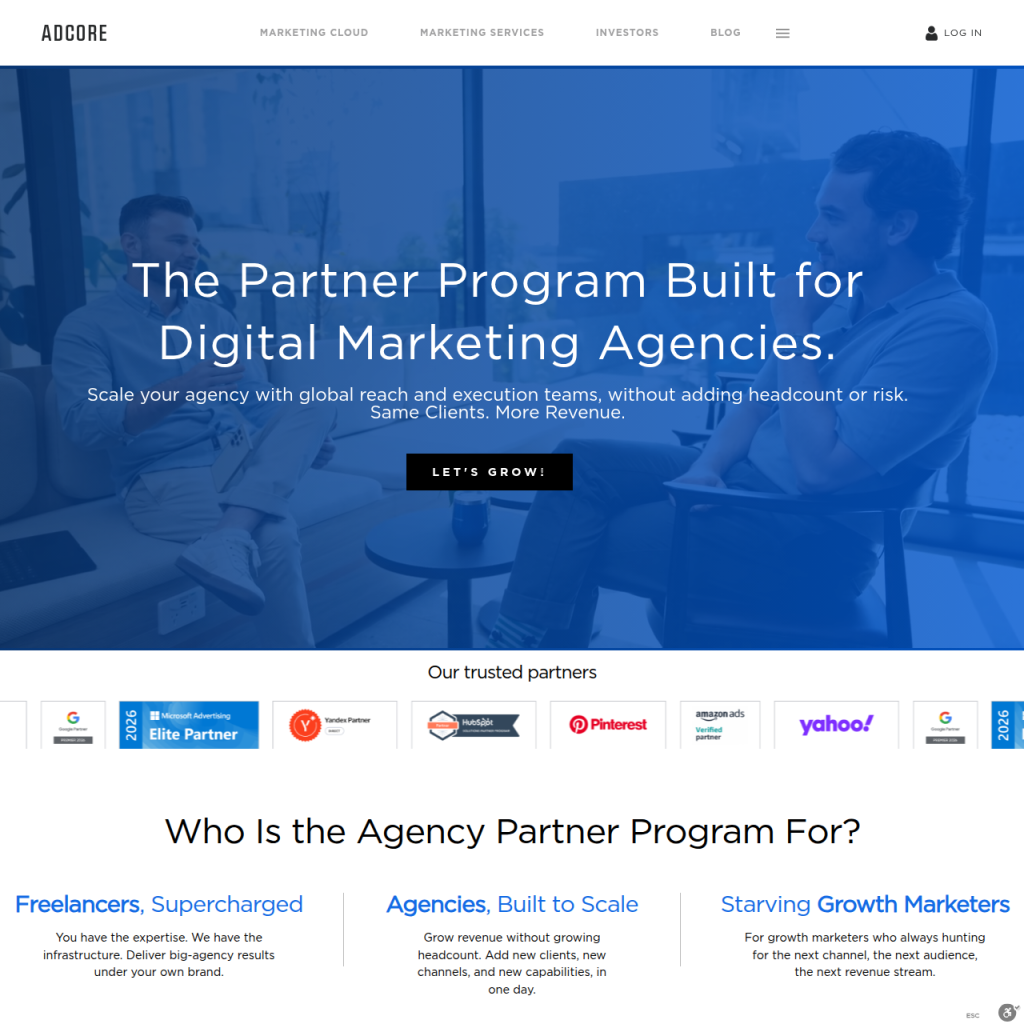
    The alternative is to go through Adcore’s Channel Partner Program and let Adcore handle the platform relationships and account setup for you.

    Instead of negotiating with every advertising platform separately, agencies can access multiple channels through one partner relationship, while also getting the benefits that come with Adcore’s existing platform partnerships.

    Depending on the channels and account requirements, benefits can include:

    • Faster access to advertising platforms without starting every relationship from scratch
    • One partner relationship instead of managing multiple platform onboarding processes
    • Support with account setup and approvals
    • Competitive commercial terms and partner benefits
    • Access to Adcore’s established relationships with major advertising platforms
    • Ongoing support as your media activity scales

    For affiliates or agencies that want to test or expand into multiple programmatic advertising platforms, the difference is simple: you can spend your time managing campaigns and clients instead of chasing approvals, negotiating terms, and managing platform relationships.

    Want to get started? You can either build each platform relationship yourself, or work with Adcore through the Channel Partner Program and let us handle the heavy lifting.

    adcore partner program screenshot

    Summary

    The platforms on this list aren’t interchangeable, and you shouldn’t run all ten. Pick the one or two programmatic advertising platforms that match where your clients’ audiences actually are, DV360 or The Trade Desk for reach, Criteo or RTB House for retargeting, Amazon DSP if commerce data matters more than anything else.

    What should be consistent no matter which you pick is how fast you can get approved, billed, and live. If account access is the thing slowing your team down quarter over quarter, that’s worth fixing before you add a sixth DSP to the pitch deck.

      Get exclusive CMO tips that I only share with email subscribers.

      Share this article
      Back to top